The Hook
Meet Sarah. As the Head of L&D at a fast-growing tech firm, she just invested a significant portion of her annual budget into a mandatory cybersecurity training program for all employees. The platform was sleek, the content was expert-approved, and the completion reports were flawless. Everyone passed.
Two weeks later, a preventable phishing attack brings the company's operations to a standstill. The culprit? An employee who had aced the training quiz just days before. The knowledge was recorded, but it wasn't retained. It didn't stick.
Now, meet Dr. Evans, a tenured economics professor. He just finished a semester of his popular ECON 101 course, and the final exam results were the best he's seen in years. By all traditional metrics, his teaching was a resounding success.
The next semester, he runs into a colleague who teaches the 200-level follow-up course. She's concerned. The students, despite their stellar grades, can't seem to apply basic supply-and-demand principles to a current market event. They memorized the definitions, but they never grasped the concepts. The knowledge was there for the test, but it wasn't durable.
Sarah and Dr. Evans operate in different worlds, but they share the same, sinking feeling. They are victims of the engagement crisis. It's the frustrating gap between delivering information and creating lasting knowledge. And it's a sign that our fundamental approach to learning and development is broken.
The Real Culprit: Event-Based Learning
This isn't a new problem, and it's not the fault of people like Sarah or Dr. Evans. The blame lies with a century-old model that treats learning as a singular event, not a continuous process.
Psychologists have known about the "Forgetting Curve" for over a century. It shows that we forget a staggering amount of new information within hours if it isn't reinforced. Our modern systems, ironically, seem perfectly designed to accelerate this curve.
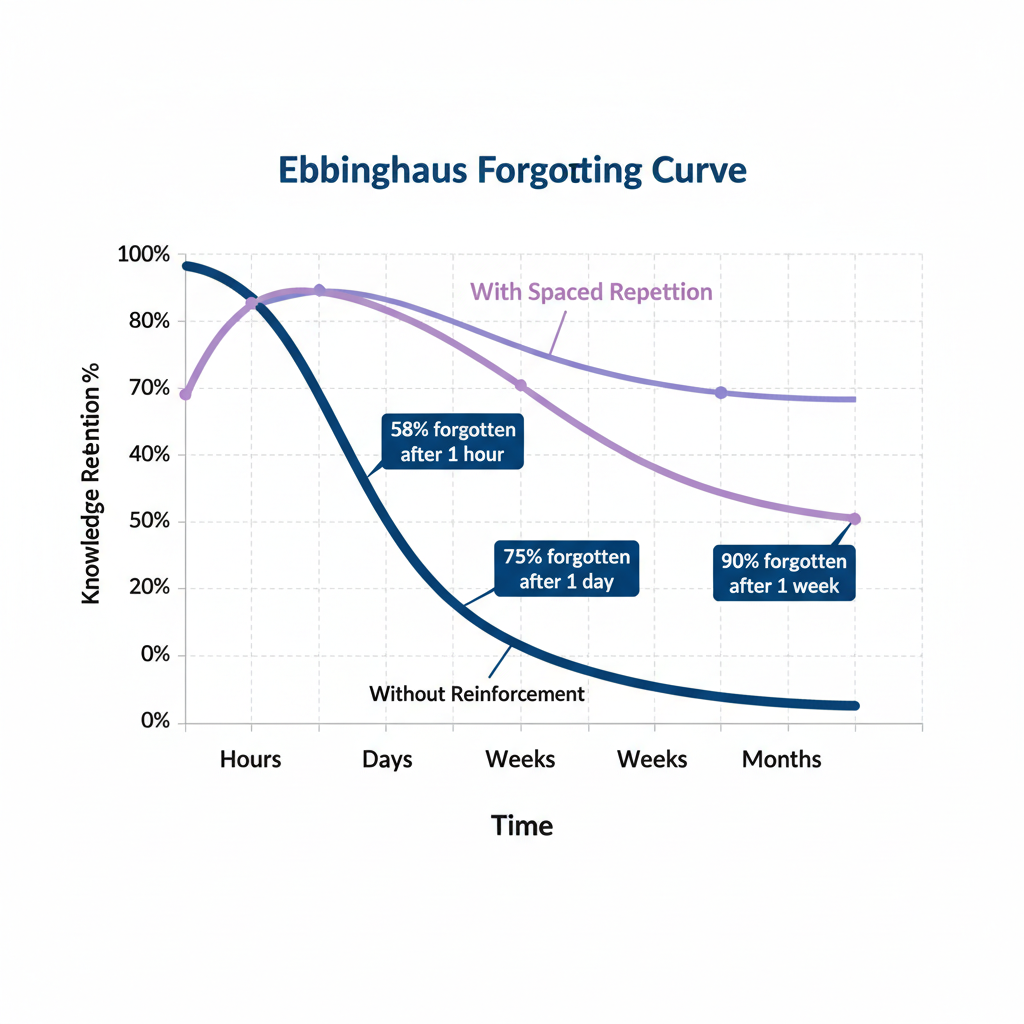
In the corporate world, this takes the form of the "information dump." We push employees through an onboarding sprint, an annual compliance blitz, or a one-off workshop. A box is checked, and everyone returns to their job. Critical knowledge is then entombed in a vast, dusty digital library—a SharePoint site, a Confluence page, a legacy LMS—completely disconnected from the workflow where it's actually needed. We call this Corporate Amnesia: the institutional knowledge exists, but nobody retains it.
In academia, this same issue fuels the "Cram and Forget" cycle. The system is built around high-stakes events: midterms and finals. Students become experts at rote memorization, mastering just enough information to earn a grade before their brain purges it to make room for the next subject. The learning isn't tied to application; it's tied to assessment. The result is a transcript full of As but a deficit of the durable, applicable skills the real world demands.
Both worlds are stuck in the same broken paradigm: they treat knowledge as a package to be delivered, not a tool to be integrated.
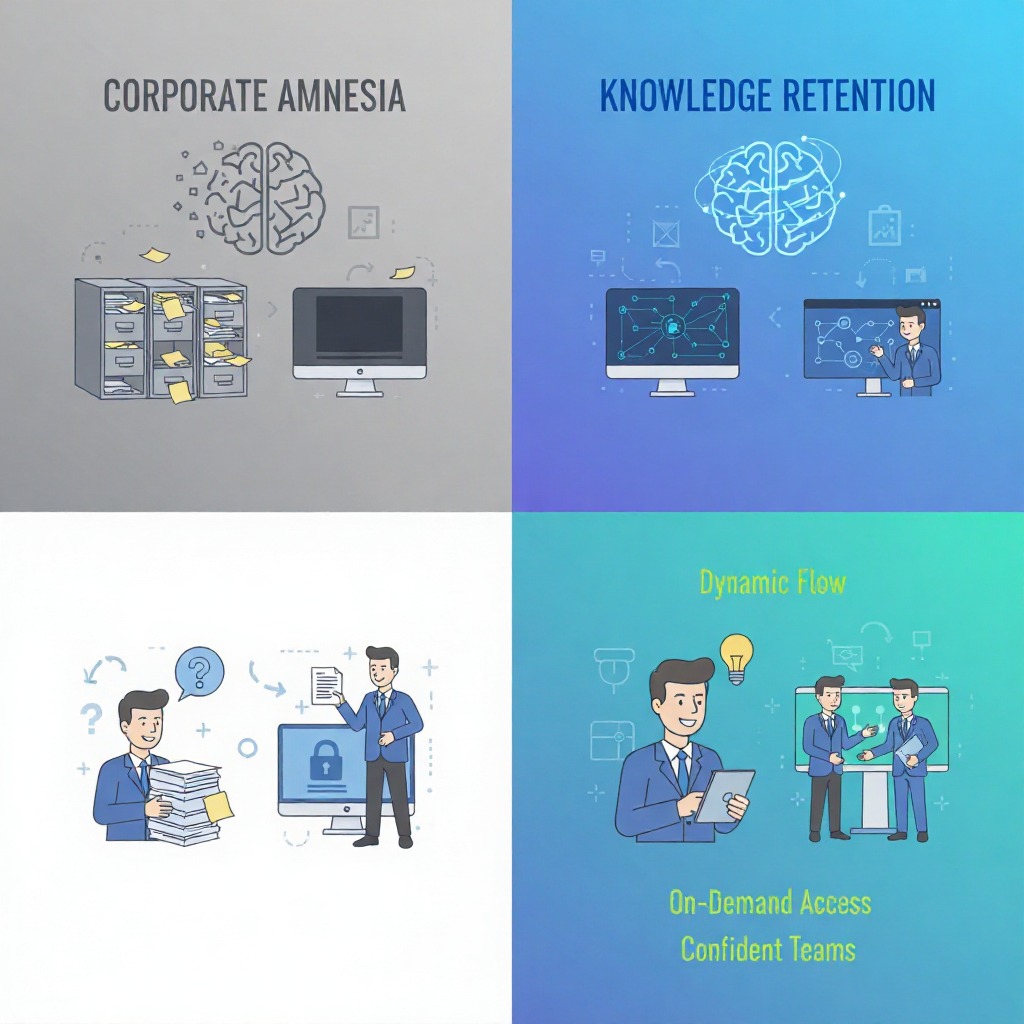
The High Cost of Forgetting
This isn't just a philosophical problem; it's a practical crisis with steep and measurable costs.
For Business: A Drain on Budget and a Drag on Performance
The financial impact is staggering. Globally, companies spend hundreds of billions on training every year. But when that knowledge evaporates the moment employees get back to their desks, it's an investment with virtually no return.
Worse, this failure creates direct risks. Compliance breaches, safety incidents, and critical quality-control errors all stem from knowledge that was delivered but not absorbed. Beyond the balance sheet, the hidden costs are a constant drag on performance: countless hours wasted by employees hunting for information they saw once in onboarding, and the immense loss of "tribal knowledge" that walks out the door every time an employee leaves.
For Education: A Crisis of Engagement and Employability
For universities and learning companies, the cost is a crisis of their very mission. The "cram and forget" cycle breeds disengagement, turning natural curiosity into a chore and contributing to student burnout and dropout rates.
The bigger issue, however, is the growing chasm between academic achievement and real-world capability. Employers increasingly report that recent graduates, despite their qualifications, lack the critical-thinking and practical skills needed to solve complex problems. When education is reduced to passing a test, we aren't just failing the student; we are failing our communities by producing a workforce that is credentialed but not truly competent.
It's Time for a New Model
So, what's the answer? A more engaging video platform? A more rigorous test?
No. The solution isn't to create a better version of a broken model. The solution is to change the model itself.
We need to stop asking, "How can we force people to remember more?" and start asking, "How can we make knowledge instantly accessible and useful at the moment of need?"
What if knowledge wasn't a destination you had to visit, but an on-demand tool, seamlessly integrated into your workflow? What if we could embed crucial knowledge directly into the flow of daily work, turning static documents into active, intelligent guidance?
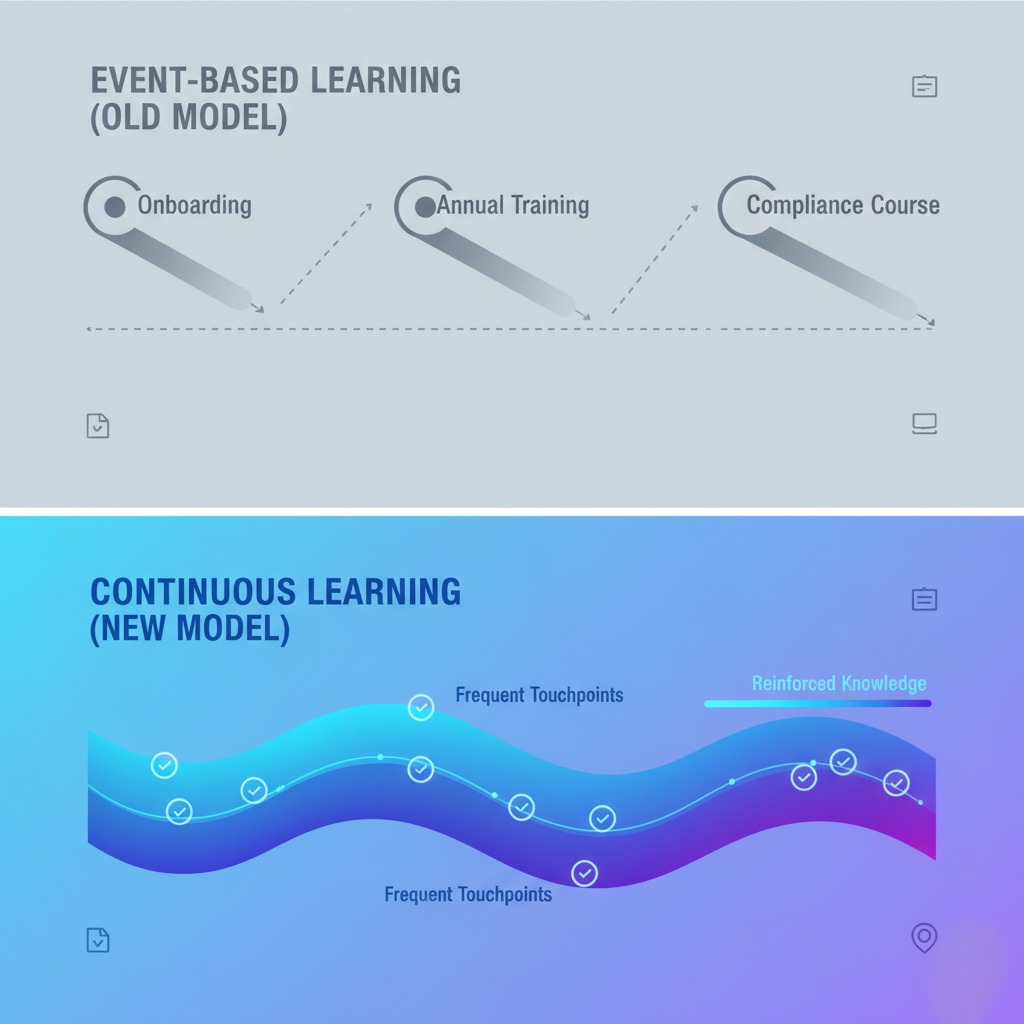
This isn't a far-off dream. It's a fundamental shift in thinking—from event-based training to integrated, on-demand support.
In our next article, we'll explore this new paradigm: how to stop 'training' and start 'tutoring,' and how technology is finally making it possible to ensure knowledge doesn't just get delivered—it gets used.